
As lamps light up homes and marigolds brighten the streets of Nepal, one of the country’s most touching traditions takes centre stage — the worship of dogs. Known as Kukur Tihar, or the Dog Festival, this annual celebration forms the second day of Nepal’s five-day Tihar festival and honours the loyalty, love and protection dogs bring to human lives.
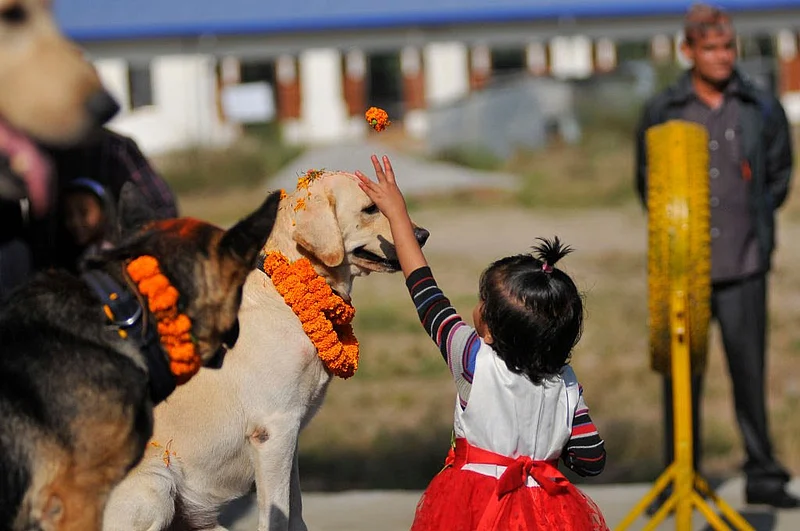
The festival, observed this year on October 20, 2025, sees dogs — both pets and strays — bathed, adorned with garlands of marigold, and marked with a red tika on their foreheads.
Kukur Tihar, the festival dedicated to honoring dogs, is being observed across the Nepal today with devotion and enthusiasm.
Recognized as loyal sentries and faithful companions of humans since ancient times, dogs are worshipped on this special day. As part of the celebration, people place garlands around their necks, apply tika on their foreheads, and offer them a variety of delicious foods as a gesture of gratitude and reverence.
This day also coincides with Narak Chaturdashi, a religious occasion on which devotees take ritual baths in rivers or ponds at sunrise. After the holy dip, people light a special oil lamp known as Yamadeep and place it facing south. The lamp is later set afloat in the water, in the belief that doing so ensures liberation from hell (Narak) after death.
In Hindu mythology, dogs are believed to be closely associated with Lord Yama, the god of death, and also feature prominently in the Mahabharat, where a loyal dog accompanies Dharmaraj Yudhisthir on his final journey toward heaven. This enduring connection between humans and dogs is celebrated and reaffirmed on this meaningful day.
They are then offered special treats such as meat, milk, eggs and dog food. The ritual is not confined to households alone — even street dogs are decorated and fed, reflecting the inclusive spirit of the celebration.
The roots of Kukur Tihar lie deep in Hindu mythology. Dogs are considered the messengers and gatekeepers of Yama, the god of death, and worshipping them is believed to bring protection from untimely death and misfortune. The Mahabharata further reinforces this reverence — when Yudhishthira, the eldest Pandava, refuses to enter heaven without his faithful dog, it symbolises unconditional loyalty and companionship.